

Trust Under Pressure: How AI Automation Is Driving the Wave of Cybercrime
Estimated reading time: 8 minutes
Key Points
- AI accelerates cyber threats: Automation makes attacks scalable, convincing, and difficult to detect.
- New attack techniques such as deepfakes, pig butchering, and automated data theft pose acute risks.
- Traditional security falls short: Only AI-driven security is still effective against modern attacks.
- The human factor remains essential: Ongoing awareness and training protect against manipulation.
- Proactive innovations and Zero-Trust are the only sustainable routes toward digital resilience.
Table of Contents
- The Rise of Smart Phishing Factories and Targeted Digital Threats
- AI as a Catalyst for Cybercrime
- Practical Impact: New Phenomena & Concrete Threats
- Why AI-Driven Security Is No Longer Optional, But Essential
- From Reactive to Proactive: How Our AI Consulting Helps Your Organization
- Key Takeaways for Decision-Makers
- Your Next Step: Resilience for Tomorrow
- Sources & Further Reading
- FAQ
The Rise of Smart Phishing Factories and Targeted Digital Threats
In a digital world where progress and threat go hand in hand, organizations see their trust in technological security increasingly under pressure. The latest development? AI-powered automation that not only increases productivity but gives cybercriminals direct advantages. Smart phishing factories, targeted attacks, and automated campaigns are appearing with increasing frequency, challenging the classic defense tactics of businesses.
How did this shift come about, and more importantly, how can businesses arm themselves against it?
AI as a Catalyst for Cybercrime
The power of artificial intelligence (AI) is undeniable. It offers unprecedented capabilities for process optimization, smarter customer contact, and automation of repetitive tasks. But this power has a dark side: cybercriminals use AI to make their attacks more scalable, more realistic, and nearly untraceable.
Phishing Factories and Targeted Threats
AI algorithms now power complete phishing factories. Without human intervention, these platforms send personalized messages at scale, perfectly tailored to the recipient. Emails, chats, and even WhatsApp messages are adapted so precisely that traditional spam filters barely recognize them (Undetectable.ai).
Additionally, AI-driven attacks such as deepfake videos or synthetic audio messages create a new generation of crime: convincing identity fraud that even experienced professionals can fall for (ESET Guide).
The Acceleration of Both Attack and Defense
Recent research shows that 80% of cybersecurity professionals in the Benelux have been confronted with AI-driven threats. Nine out of ten experts moreover expect this trend to only increase (SoSafe Report).
An additional danger: because of AI, not only specialized hackers but also less technically skilled attackers are able to use advanced, rapidly adaptable tools. Automation exponentially increases their striking power, while traditional security measures can barely keep pace (Undetectable.ai, Dutch IT Channel).
Practical Impact: New Phenomena & Concrete Threats
Deepfakes, Disinformation, and Social Engineering 2.0
The use of deepfakes and synthetic content for social engineering is no longer science fiction. Criminals use AI to create precise imitations of voices or videos, impersonating colleagues, directors, or suppliers. Disinformation campaigns are also flourishing: bots and fake accounts spread fake news and influence public opinions within minutes (didev.nl).
New Attack Variants: Pig Butchering & Automated Data Theft
Innovative attack techniques such as "Pig Butchering" use smart AI chats to lure victims into fake investment groups. AI-powered web scraping, which rapidly collects personal data, is also on the rise, forming the foundation for more targeted, more convincing attacks.
The Rise of Digital Sextortion and CSAM
AI creates additional concerns for law enforcement around sextortion and child sexual abuse material (CSAM). The rapid creation of realistic but fake media content creates a new category of cybercrime, difficult to detect and even harder to prosecute (Undetectable.ai).
Why AI-Driven Security Is No Longer Optional, But Essential
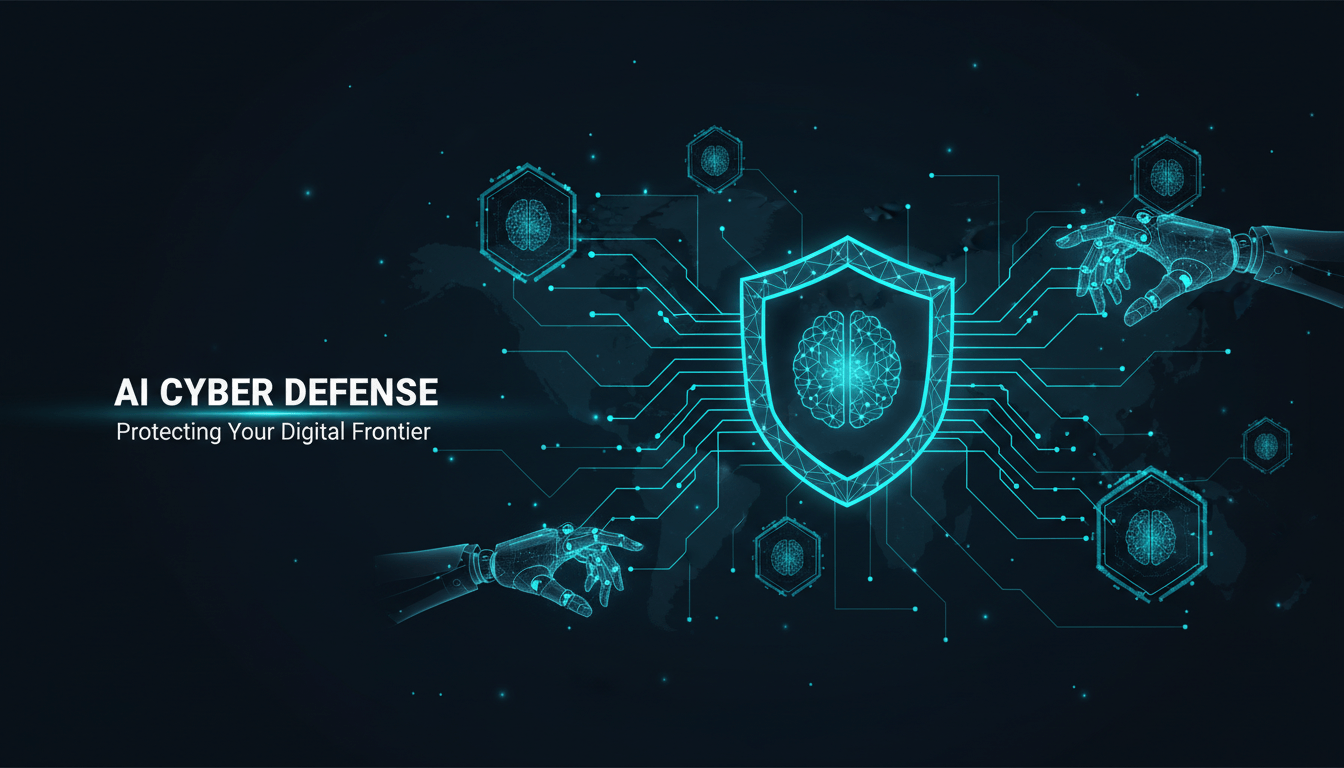
Where AI is tipping the balance of attack, it must also strengthen the defense. However, figures show that only 26% of security professionals can adequately trace and neutralize AI attacks (ICT Magazine).
The Three Pillars of Resilience:
- Awareness & Training: Make employees aware of new risks through practice-oriented AI workshops and digital simulations. Understand that the human factor remains the weakest link.
- Automated Monitoring & Zero-Trust: Implement automated monitoring and a Zero-Trust security model: grant no access until identity is validated and continue monitoring continuously.
- AI as a Shield: Invest in AI-driven security tools that detect anomalies at lightning speed and dynamically respond to new attack patterns.
From Reactive to Proactive: How Our AI Consulting Helps Your Organization
As an AI consulting and workflow automation expert, we guide organizations through the complete digital transformation journey. This begins with a thorough analysis of existing processes and identifying vulnerabilities, after which we develop strategic innovation roadmaps.
Our offerings:
- AI security assessment: Mapping risks, testing scenarios, conducting DPIAs, and embedding privacy-by-design into all processes.
- End-to-end workflow automation: With specialized AI solutions, we automate both internal and client-facing processes, with attention to security and compliance.
- Practice-oriented AI workshops: Training your teams to recognize AI-driven threats and respond effectively.
- No-code and low-code implementation: Building quickly scalable, secure solutions without heavy IT effort, tailored to SMEs.
Ready to transform your organization with AI?
Discover how we can help you with AI workflow automation.
Get in Touch