


Estimated reading time: 9 minutes
Key Points:
- Claude Code transforms from a smart assistant into a business-critical operating system
- Anthropic's AI agents completed an entire compiler – proof of maturity and scalability
- Rapid technological evolution requires flexible strategy and integration of various AI tools
- Directly applicable to strategy, operations, development, and quality assurance
- Companies that work AI-First build a self-improving and differentiating business model
Table of Contents
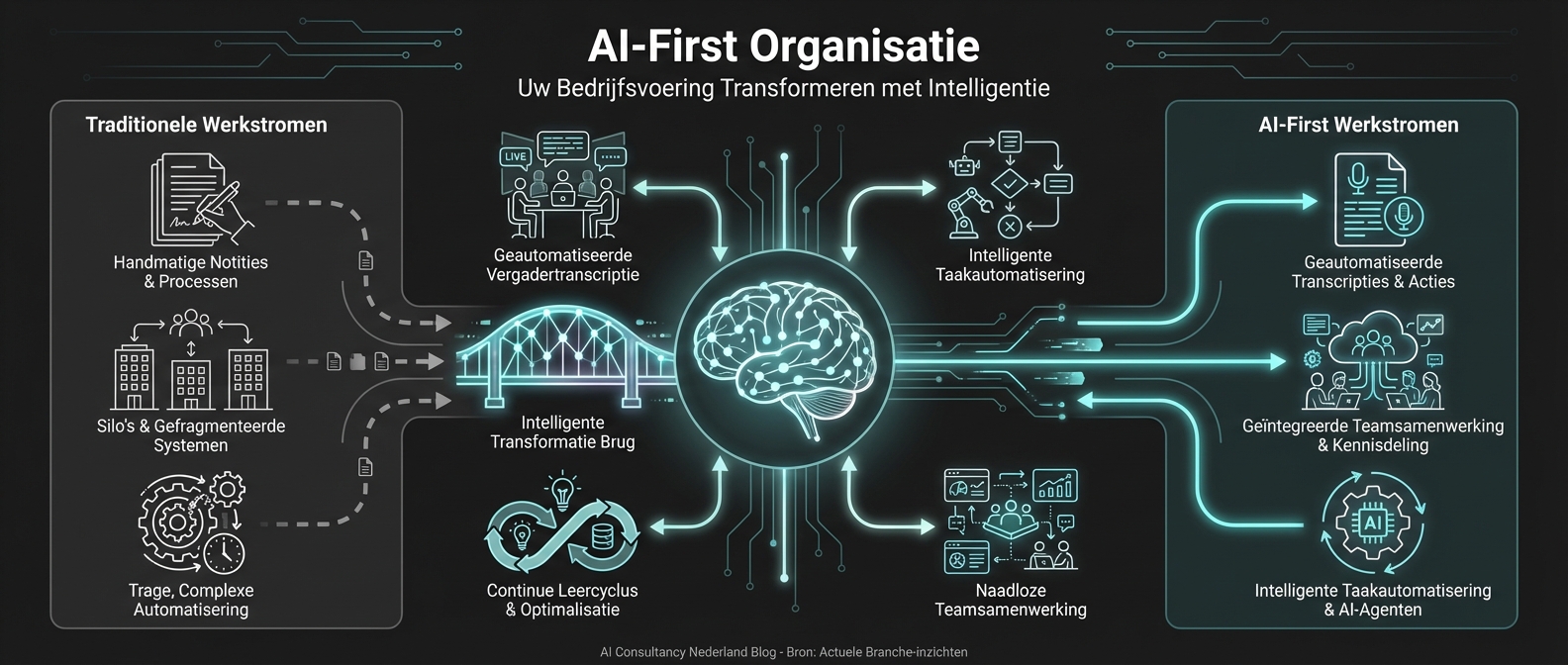
- AI: From smart assistant to business-critical operating system
- What makes Claude Code groundbreaking?
- Technological edge in 2026 and the lightning-fast evolution
- The practical value for businesses: Claude Code in operation
- Self-improving system – The power of AI as an operating system
- How we deploy Claude Code and workflow automation
- Boundaries, challenges, and responsible oversight
- Conclusion: The opportunity for an AI-First future
- FAQ
AI: From Smart Assistant to Business-Critical Operating System
It won't have escaped your notice: Claude Code dominates the AI news. What initially started as “yet another code tool” has proven to be a breakthrough that radically changes the foundations of software development – and business operations. Anthropic's Claude Code is currently the talk of the town among innovative companies, and rightly so.
The deployment of autonomous AI agents, as recently demonstrated by Anthropic's experiments, marks a turning point: AI is not merely a smart assistant that helps you with individual tasks, but is developing into a business-critical operating system. In this article, we dive into the value and practical deployment of Claude Code, and show how we use Claude Code as a crucial component in our AI-First platform – without being dependent on a single tool, but working flexibly and strategically with multiple AI technologies.
What Makes Claude Code Groundbreaking?
Recently, Claude Code made headlines after a spectacular experiment by Anthropic.
Nerd alert! The following section is somewhat technical; in plain language: AI built on its own what would normally take a team months, and it worked.
The experiment, in which 16 AI agents together – autonomously – built a complete C compiler in Rust (100,000 lines of code) without direct human guidance (source). The result? A compiler that could successfully build and run a modern Linux kernel and the legendary game Doom.
- Agents worked entirely in parallel, communicated via a central Git system, and prevented duplicate work through smart locking (source).
- Minimal human assistance needed, except for extremely specialized tasks – AI systems are ready to take over structural tasks within organizations.
- Scale: 2,000 Claude Code sessions, 2 billion tokens processed, investment of over $20,000 – a realistic proof-of-concept at enterprise level.
The rollout of this technology shows that companies no longer need to wait for future AI applications; Claude Code is mature, scalable, and immediately deployable – provided it is strategically applied.
Technological Edge in 2026 and the Lightning-Fast Evolution
In the span of a year, AI tools made an enormous leap forward. Last year, advanced agents still required complex setup and frameworks; today, Claude Code is more stable, more secure, and more powerful.
- Better intent recognition: Models understand complex instructions and contexts significantly better.
- Long-term context: Claude Code maintains oversight over long sessions and projects.
- Fewer errors with multi-file changes: Crucial for larger software projects.
- User-friendliness: No more cumbersome frameworks needed. Skills and sub-agents are modularly deployable.
- Plan mode: Specifically for structured (spec-driven) development.
As a result, Claude Code has transformed in a short time from an experimental tool into production-ready AI for organizations that want to operate 'AI-First' or 'AI Ready' (source).
Note: AI technology is evolving at breakneck speed. Today, Claude Code is the leading system, but there's a good chance that a new generation of tools will emerge in the foreseeable future – or that open models will offer these capabilities with an eye toward data sovereignty and more control over your own data and processes. The landscape is extremely dynamic, and companies are wise to keep evaluating and experimenting with diverse systems to avoid becoming dependent on a single platform.
The Practical Value for Businesses: Claude Code in Operation
The power of Claude Code manifests primarily in four business domains:
1. Strategy & Sales
- Automatically preparing sales meetings, following up on client contacts, and generating market research.
- Result: Your team can act faster and focus more on relationship management, while peripheral tasks run automated.
2. Operational Management
- Converting meeting transcriptions into action items, creating tickets in project tools like ClickUp, generating and distributing standard documents.
- Result: Manual administration shrinks, action lists are immediately up-to-date, information loss is minimized.
3. Development & Automation
- Writing, reviewing, and testing code, but also designing architecture and even setting up complete workflow automation (for example in n8n).
- Result: Development happens faster, more consistently, and with higher reliability.
4. Quality Assurance
- Systematically (and critically) having Claude Code review your own work before it goes to clients.
- Result: Fewer errors, higher client satisfaction, consistent branding.
These domains are immediately applicable. Organizations that fully integrate Claude Code or comparable AI technologies within a broader AI-First platform notice direct time and cost savings and build a self-learning system that over time becomes exponentially smarter.
Self-Improving System – The Power of AI as an Operating System
Most companies still use AI primarily as an ad-hoc assistant. We've gone a step further: we've developed an AI-First system, where Claude Code currently plays an important role.
Every learning moment – think of correcting a wrong phone number in a quote or sharpening a too-distant email – we feed directly back into the instruction set of our AI system. As a result, our AI platform becomes fault-tolerant: a mistake can in principle only occur once. The complete learning process resides within the AI system itself, not in human notes that get forgotten. Every project, every client interaction, and every error makes the entire company smarter and more effective.
The continuous integration of Claude Code is therefore a strategic choice within our larger AI ecosystem, which accommodates various AI tools and in which we deliberately do not depend on a single tool. This AI-First approach enables companies to build a strategic advantage, because the system optimizes itself. This is where we fundamentally differentiate from organizations that view AI primarily as a nice-to-have.
How We Deploy Claude Code and Workflow Automation
For us, Claude Code is not an incidental tool – it is an important building block in our AI-First platform, which we have deeply woven into our strategy, operations, software development, and quality cycle, in combination with workflow automation such as n8n. Yet we remain flexible to quickly integrate new AI models and technologies where needed.
In concrete terms, this looks as follows:
- Sales and strategy: Claude Code combines client data, analyzes information, and writes personalized follow-ups. It supports market research and optimally prepares meetings.
- Operations: Automatic conversion of meeting transcriptions into action items, creating tickets in our project management software, and process documentation – all via integration with workflow engines like n8n.
- Development: Claude Code writes code and builds automations, with tools like n8n as the connecting layer between different systems. Developers don't just review output but continuously train and improve the AI system.
- Quality cycle: Every feedback moment is directly converted into updates for the AI operating system, so error scenarios cannot be repeated.
This makes us as an organization not merely AI-Ready, but fundamentally AI-First: AI forms the core of our strategy, operations, and innovation. This approach is scalable and replicable for client situations: from automated email handling, content creation, to internal chatbots or complex process automation. And always with the ability to quickly integrate emerging AI innovations or open models to maintain our independence and data sovereignty.
Boundaries, Challenges, and Responsible Oversight
Yet there are important considerations:
- AI (such as Claude Code) remains less efficient than top manually written code for specialized custom work, especially for very specific hardware where human expertise remains necessary (source).
- It remains essential that humans supervise, validate, and continuously improve AI systems. A 'human-as-referee' mentality is necessary to ensure quality and safety (source: Carlini).
- The market is moving toward open models. More and more companies are choosing open source AI solutions where data sovereignty – full control over data and processes – becomes possible. This development accelerates innovation and ensures healthy competition between platforms.
For businesses: Start small, choose a strategic process, measure the effect, and build from there. Make people co-responsible for fine-tuning and monitoring, not just for blind automation. And stay flexible: automate with an eye on changing technology and the ability to quickly embrace other models or systems.
Conclusion: The Opportunity for an AI-First Future
Claude Code doesn't just set the tone for autonomous agents in software development but also transforms how companies can automate their processes and learn from every interaction. Those who invest in genuine AI-First systems will soon have a self-improving, scalable, and competitive business model – regardless of which specific AI platform leads at that moment.
We've already made this leap with an AI-First system, where Claude Code currently plays a key role – ready to work alongside or be replaced by other (open) systems, depending on what works best. Want to know what this means for your organization, or how Claude Code – or in the future other (open) AI systems – combined with workflow automation like n8n can make your processes smarter? Contact us for a no-obligation inspiration session or a specific workflow demonstration.
FAQ
What is unique about Claude Code compared to other generative AI?
Claude Code excels in scale, autonomy, and reliability for business-critical processes. The unique experiment in which sixteen agents together and largely independently built a compiler underscores this maturity – and makes immediate deployment on large projects possible. The technology is also modular and flexible to incorporate into existing workflows.
Can Claude Code be deployed immediately in my organization?
Yes, provided you start deliberately with concrete business processes and clear supervision. Pilot projects in the areas of sales, operational management, or software development deliver immediate value, after which rollout can proceed broader and deeper. Integrations with other AI tools and workflow engines (such as n8n) increase the impact.
How do I prevent dependency on a single AI system/platform?
By working modularly, testing with multiple AI technologies and open models, and maintaining an AI-First architecture, you retain control over data, processes, and innovation pace. It pays to automate flexibly and always keep exploring alternatives.
Does human supervision still play a role?
Yes, human supervision and feedback are essential for ensuring quality, safety, and the continued learning of the AI system. Humans monitor, guide, and continuously improve the AI platform.
Ready to transform your organization with AI?
Discover how we can help you with AI workflow automation.
Get in Touch