
From Search Engine Optimization to Generative Engine Optimization: How Quality, Structure and Automation Are Changing the Game
Estimated reading time: 8 minutes
Key Takeaways
-
Generative Engine Optimization (GEO) is the future: optimize for citation in AI answers, no longer just for search engine results.
-
Quality, structure, accurate source attribution and speed are essential for visibility in LLMs.
-
Automation and schema markup increase the chance of AI citation and consistently high content quality.
-
Monitor where your brand appears in AI outputs, and quickly adapt content based on new questions and trends.
Table of Contents
What is Generative Engine Optimization (GEO)?
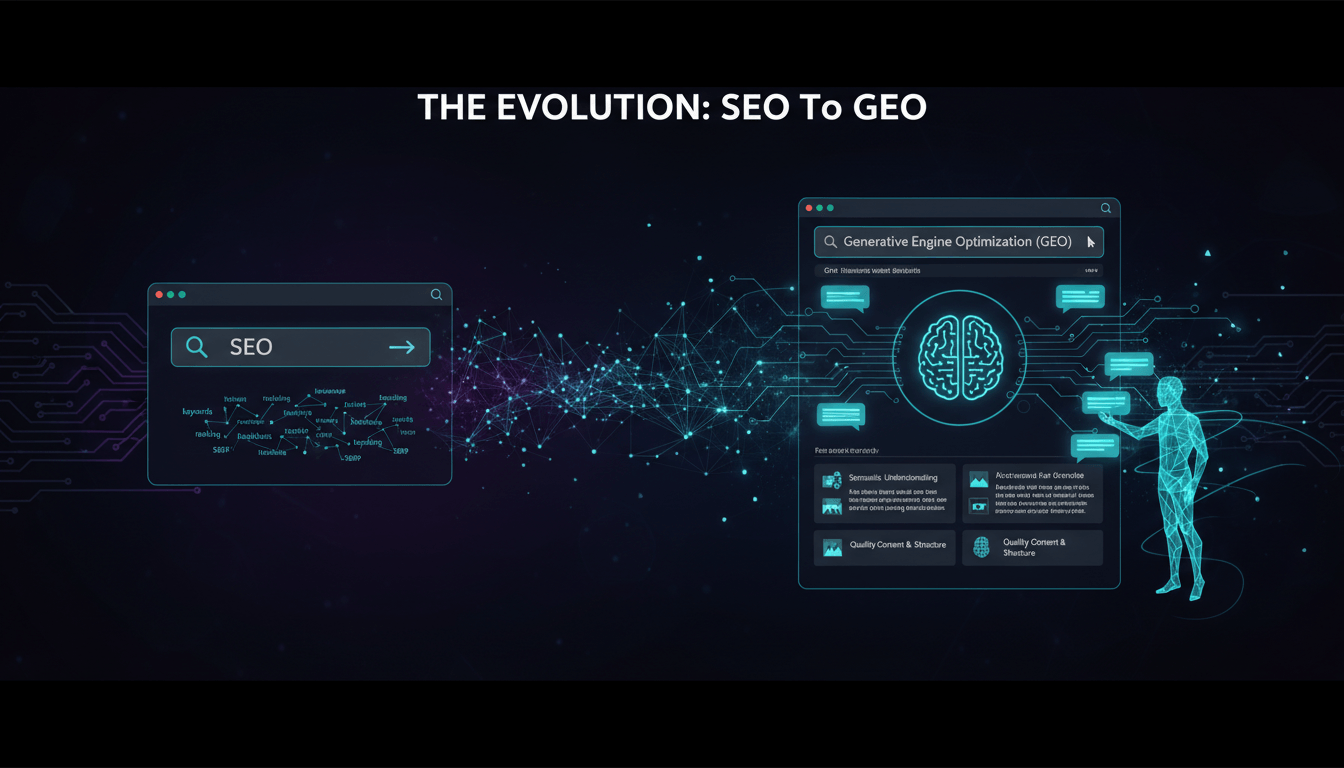
GEO is the evolution of SEO, focused on the functioning of Large Language Models (LLMs). Where traditional SEO revolves around ranking within search engines, GEO focuses on visibility, authority and citation in answers from AI systems like ChatGPT, Google Gemini and Perplexity (source).
We no longer focus purely on the 'blue links' in Google, but on appearing and being cited as a source in AI-generated answers.
Key Differences Between SEO and GEO
-
Answer source: AI engines generate contextualized answers, not traditional link lists.
-
Citation authority: Backlinks matter less; what counts is how often your domain appears as a source in AI results.
-
Conversational: Naturally written, conversation-oriented content scores better than purely keyword-driven texts.
-
Visibility Score: GEO measures visibility through mentions, not just organic ranking.
-
Limited mentions: On average only 2-7 domains per AI answer (source).
What Should You Pay Attention to with GEO?
Being successful in GEO means taking into account quality, structure and technical accessibility. Here are the most important factors:
Quality and Structure of Content
-
Authority & factuality: AI models like Gemini and ChatGPT rely on well-founded, up-to-date content (source).
-
Well-structured content: Clear structure, distinct headings, schema markup and source attribution increase the chance of AI citation.
-
Technical accessibility: Ensure fast loading times, mobile-friendliness and crawlability (source).
-
Conversational optimization: Write answers to real customer questions, not just keyword lists (source).
-
Optimize for Bing: ChatGPT uses Bing for web search – optimizing for this directly increases your GEO success by being included as an AI source!
Measuring Success
-
Tracking citations: Monitor how often you are mentioned in AI answers, with tools like Ziptie (source).
-
Competitive analysis: Research which domains are being cited and why.
-
Reputation management: Ensure your brand comes across as current, consistent and reliable (source).
What Works and What Doesn't?
Effective Strategies for GEO
-
Comprehensive, reliable guides: AI systems choose in-depth content with strong substantiation (source).
-
Clear technical structure: Use schema markup so AIs can easily understand and process your content (source).
-
Facts & source attribution: Focus on substance without excessive marketing language.
-
Timeliness: Regular updates increase your chances with LLMs (source).
-
Brand mentions: Ensure your brand awareness on relevant, external platforms (source).
Strategies That Don't Work
-
Keyword stuffing: Unnatural optimization is ignored (source).
-
Content without sources: AI ignores content without clear references.
-
Poor structure or slow loading time: Technical shortcomings work against you.
-
Isolation: Don't focus only on your own platform – the broader ecosystem counts (source).
How Important Is Content in the Era of GEO?
Content forms the foundation, but the requirements are higher than ever. AI systems only pick the best and most up-to-date pieces (source). Automatically generated content is only effective with a strict focus on semantics, updates and technical accessibility.
A platform that publishes content quickly and automatically (including schema markup, semantic enrichment and real-time updates) is a crucial competitive advantage. Quantity alone doesn't work; every publication requires maximum content and technical quality.
Practical Takeaways and Action Points
For those who want to strategically apply GEO in 2025, these are the most important action points:
-
Invest in well-structured, factual content aimed at real questions from your target audience.
-
Automate publication via platforms with standard schema markup and full technical optimization.
-
Monitor AI citations: know where, how and why your brand is mentioned.
-
Update content quickly and frequently to remain relevant for LLMs.
Ready to transform your organization with AI?
Discover how we can help you with AI workflow automation.
Get in Touch