



Estimated reading time: 5 minutes
Key points:
- An AI assistant does not have to start with an empty head after every conversation. What you tell it can stick.
- Feedback lands in three places: your personal memory, the shared ground rules for the team, and routines that run by themselves.
- Everyone working with this AI gets the same tooling. What you put into it, what you remember and how you sound, is what makes it yours.
- You are really building a foundation: the more you share, the better the assistant fits the way you work.
- This is what growing along actually means. It saves you explaining yourself all over again.
Table of contents
- From a comment to an agreement
- Three places to store something
- Does everyone get this, or is it ours?
- What it means for you
- How we can help
- Frequently asked questions
I gave our AI assistant one comment the other day: I do not want to see this word again. A week later, in a completely different conversation, it still got it right. No reminder I set, no switch I flipped. It simply knew.
I think there is something in that which a lot of people miss about AI. The idea persists that an assistant like this starts from zero after every conversation. Not ours. And really, that is the difference between a handy chatbot and a colleague who grows with you.
From a comment to an agreement
What exactly happens when you say something? The assistant makes a simple call first. Does this apply only right now, or from now on? A one-off instruction it applies and then lets go. Something lasting, it stores in the right place. And in your next conversation it comes back the moment it fits.
Here is what that route looks like.
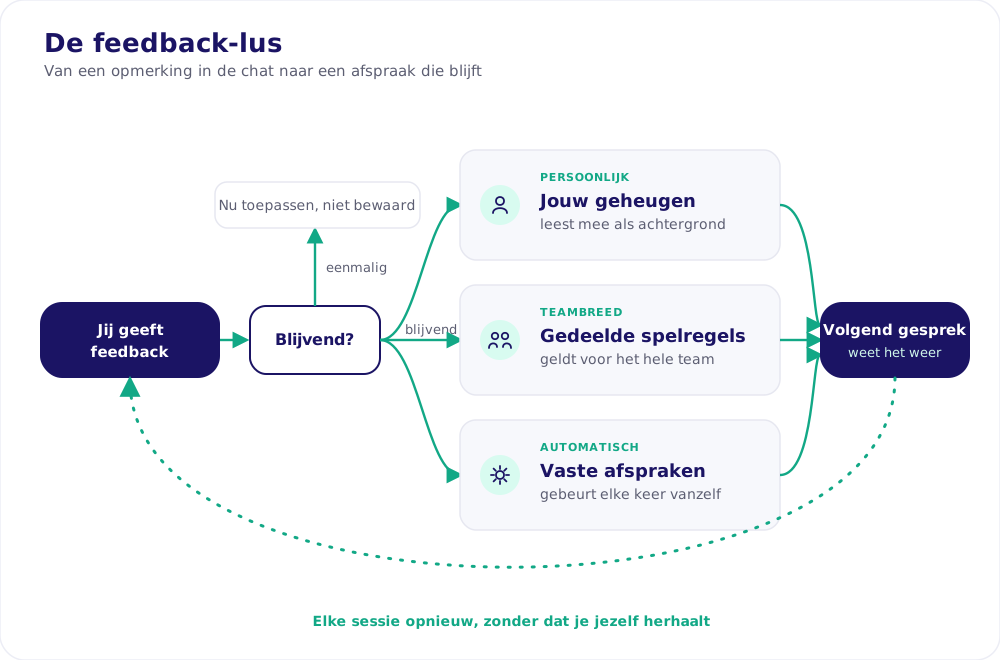
You do not have to install anything. You say it in your own words, and the assistant handles the rest. That sounds like a small thing, but it takes away a lot of friction. You explain a preference once instead of every week.
Three places to store something
Not everything belongs in the same place. So the assistant looks at where something fits.
The first place is your personal memory. Preferences and facts that mainly apply to you. The assistant reads them as background, like a colleague who knows how you like things done.
The second place is the shared ground rules. Agreements for the whole team. Our writing style sits there, for example, right down to the detail that we do not use dashes. Those rules always apply, for colleagues too, and also when someone else works with the assistant.
The third place is the automatic routines. Things that have to happen every time, without anyone remembering to do them. Useful for the steps you would otherwise keep forgetting.
Why that distinction? Because a personal preference is a different thing from a team rule. If you say "I do not want this word", the question is: does that go for you, or for all of our work? When in doubt, the assistant simply asks what you mean.
Does everyone get this, or is it ours?
The remembering itself, the ground rules, the automating: the assistant can do all of that out of the box. Everyone who works with this AI gets that same tooling.
What we did was give it our own shape. We decided which things we remember: our clients, our projects, our preferences. We wrote down our writing style. We made sure the assistant knows whether it is me working or my colleague. And that our knowledge base stays tidy instead of filling up.
So the tooling comes from the maker. What goes into it is ours. I think that is exactly why our feedback lands straight away. The assistant already knew our clients, our writing style and our way of working, so a new preference falls into place instead of floating around.

What it means for you
An AI that knows how you work saves you repetition. You get work back that fits how you want it, instead of a generic answer you still have to polish. And it gets better the more you share.
For us it also shows what AI maturity means in practice. Switching on one clever tool will not get you there. You build a foundation step by step, and the assistant grows on it along with your organisation. That takes attention up front. After that it pays itself back in the time you no longer spend explaining.
How we can help
We set this up for ourselves and use it every day. If you want to know what something like this would look like for your team, we are happy to think along. With the AI scan we map out where most of the repetition sits in your organisation. We would rather start with a conversation than with a quote: first look at where things chafe, then build.
Frequently asked questions
Does the AI automatically remember everything I say?
No. It only stores something when you ask for it, or when it is clearly a lasting preference. Loose remarks meant for this one conversation do not stick around.
Where does that information live?
In ordinary files inside our own environment. Your personal memory sits separately, and the shared ground rules travel with the project so the team benefits from them too.
Can a colleague see my personal preferences?
Your personal memory is yours. The shared ground rules are deliberately there for everyone, because that is where the agreed way of working lives.
What if an agreement no longer holds?
Then you adjust it or take it out. For information that can go stale, such as amounts or dates, we add a note to check it in time.


Want to apply this in your own organization?
In a no-obligation conversation we look at which tasks take up most of your team's time, and whether AI can safely take them over or speed them up. We respond within 24 hours.
Book an intro call